How to Run a 20-Minute Build • Think • Create™ Literacy Center That Students Love
Every elementary teacher knows the challenge.
You have twenty minutes.
Twenty minutes to engage students, reinforce literacy skills, encourage creativity, and somehow manage the rest of your reading groups at the same time.
It can feel like trying to fit a library into a lunchbox.
The good news is that meaningful literacy learning doesn’t have to take an hour. With a simple routine and the right materials, a 20-minute literacy center can become one of the most anticipated parts of your students’ day.
The Build • Think • Create™ framework was designed with real classrooms in mind. It gives students a predictable structure while allowing endless opportunities for creativity, collaboration, and writing.
Whether you’re teaching second grade, working with gifted learners, or looking for an engaging enrichment activity, this routine can easily become part of your literacy block.
What Is a Build • Think • Create™ Literacy Center?
A Build • Think • Create™ center combines hands-on building, purposeful discussion, and meaningful writing into one short lesson.
Students begin by solving a creative building challenge. They then reflect on their ideas through guided questions before turning those ideas into writing.
Instead of asking students to write first, the building process provides inspiration and helps organize their thinking.
The result is a literacy activity that feels more like creating than completing an assignment.
Why Twenty Minutes Is Enough
Many teachers assume creative projects require long blocks of time.
In reality, a focused twenty-minute session encourages students to think quickly, make decisions, and stay engaged.
A shorter time frame also fits naturally into:
- Literacy centers
- Reading rotations
- Early finisher activities
- Gifted enrichment
- STEAM blocks
- Indoor recess enrichment
- Summer learning programs
Consistency matters more than length.
Students become more independent each time they follow the same routine.
The 20-Minute Routine
Minutes 1 to 2: Introduce the Challenge
Present one clear building prompt.
For example:
- Build a vehicle that explores the deepest part of the ocean.
- Design a playground for dinosaurs.
- Create a tiny home for a forest fairy.
- Invent a machine that helps your classroom.
- Build a new planet for astronauts to explore.
Keep directions simple.
The challenge should encourage imagination rather than perfection.
Minutes 3 to 9: Build
Students begin creating with a limited collection of building bricks.
As they work, circulate through the room asking open-ended questions:
- What inspired your idea?
- What problem does your creation solve?
- How does it work?
- What happens next?
- What would you change if you had more time?
These conversations help students organize their thoughts before writing.
Minutes 10 to 13: Think
Before anyone begins writing, pause for reflection.
Students can turn to a partner or small group and explain:
- What they built
- Why they built it
- The biggest challenge they solved
- One detail they’re especially proud of
This short discussion helps students rehearse their ideas aloud, making the writing process smoother and more confident.
Minutes 14 to 20: Create
Now it’s time to write.
Depending on your learning goals, students might write:
- A narrative story
- An informational article
- A newspaper report
- A diary entry
- Instructions
- A persuasive paragraph
- A scientific explanation
Even a short written response can demonstrate deep thinking when students have already built and discussed their ideas.
Materials You’ll Need
One of the best parts of this literacy center is its simplicity.
Gather:
- Building bricks or other open-ended construction materials
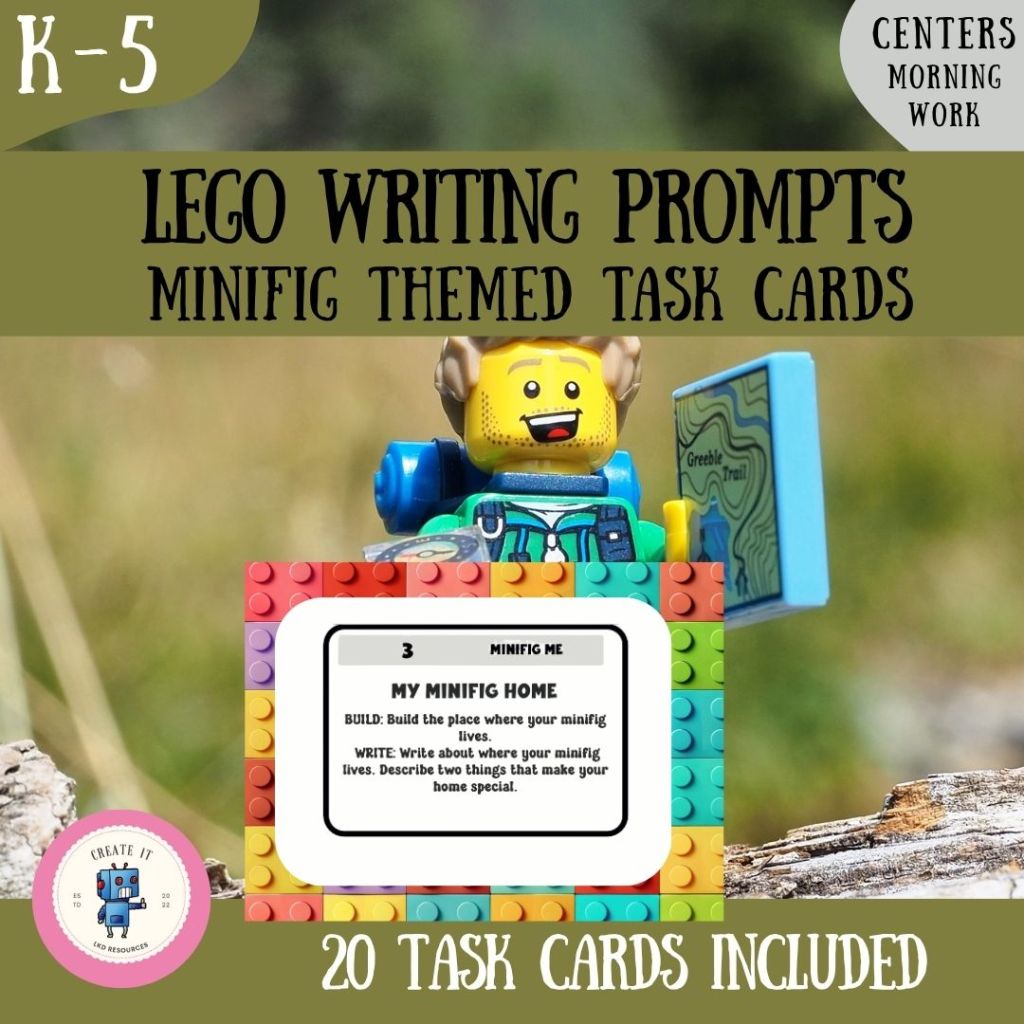
- A challenge card
- A writing page
- Pencils
- Optional vocabulary or planning cards
You don’t need elaborate kits or expensive supplies.
Creativity grows from opportunities, not from the number of pieces in the bin.
Classroom Management Tips
A predictable routine helps students become increasingly independent.
Use Individual Brick Bags
Small bags or containers prevent students from spending valuable time searching for pieces.
Display a Visual Timer
A timer keeps everyone moving through each stage of the activity.
Keep Expectations Consistent
Students quickly learn the rhythm:
Build. Think. Create.
The familiar structure allows them to focus their energy on the challenge rather than the directions.
Celebrate Ideas, Not Perfection
Every build should be valued for its creativity, problem-solving, and originality.
Students don’t need identical creations to achieve the same learning goals.
Differentiating for Every Learner
One routine can support a wide range of abilities.
Beginning Writers
Provide:
- Sentence starters
- Picture vocabulary
- Labeled diagrams
- Drawing space before writing
Developing Writers
Encourage:
- Descriptive details
- Transition words
- Multiple paragraphs
- Dialogue
Advanced Writers
Challenge students to:
- Write from multiple points of view
- Explain engineering decisions
- Compare solutions
- Add plot twists
- Research related topics
The building challenge stays the same while the writing expectations grow with each learner.
Connecting to Other Subjects
Build • Think • Create™ naturally supports cross-curricular learning.
Science
Build an animal habitat and explain how it meets the animal’s needs.
Social Studies
Design a community that solves a real-world problem.
Math
Create a structure using specific geometric shapes and explain your design choices.
STEAM
Engineer a bridge, invention, or rescue vehicle and write about how it works.
Students aren’t just writing.
They’re writing with purpose.
Common Questions
What if students don’t finish?
That’s perfectly fine.
Students can:
- Continue during the next center rotation.
- Finish during independent work time.
- Share their ideas verbally.
- Complete the writing the following day.
The goal is quality thinking, not rushing to the finish line.
Do students have to use LEGO® bricks?
No.
Magnetic tiles, wooden blocks, recycled materials, cardboard, craft sticks, and other building materials work just as well.
The framework focuses on creative thinking, not a specific product.
Can I use this every week?
Absolutely.
Simply rotate the challenge cards and writing prompts while keeping the same Build • Think • Create™ routine.
Students thrive when expectations remain familiar while the challenges stay fresh.
Why Students Keep Asking for It
When students know they’ll have the opportunity to imagine, design, discuss, and write, literacy becomes something they look forward to.
They’re no longer completing writing because they have to.
They’re writing because they have something meaningful to say.
That enthusiasm carries into other writing experiences throughout the school year.
Final Thoughts
In every classroom, time is one of our most valuable resources.
A well-designed literacy center makes every minute count.
The Build • Think • Create™ framework transforms twenty minutes into an experience that develops creativity, communication, collaboration, critical thinking, and writing, all within a predictable routine that students quickly learn to love.
You don’t need more hours in your literacy block.
You need a routine that helps students think before they write.
Sometimes, all it takes is twenty minutes, a handful of building bricks, and an invitation to imagine what is possible.
One challenge.
One conversation.
One story at a time.
Check out resources here: https://www.teacherspayteachers.com/store/lkd-learning-and-teaching-resources


Leave a Reply